Rotate your device
This presentation is designed for landscape orientation.
01
SAME Eglin AFB Chapter  |  June 3, 2026

Building Controls,
Automation & the
Realm of Possibilities

Tim Collins — President  |  David Harrison — Vice President
The Controls Company
Scan to follow along
02
Your Presenters

Tim Collins MBA · LEED Green Associate · NICET I

President — The Controls Company SDVOSB · Air Force Veteran
  • U.S. Air Force veteran
    • E-5 Staff Sergeant — Missile & Space Systems Electronics
    • Operation Enduring Freedom — Uzbekistan 2004
    • Completed MBA on the GI Bill — University of Wisconsin-Madison
  • 18+ years in building automation — Johnson Controls (2007–2021) across service, programming, project delivery, and sales
  • Led $7.5M ESCO controls project at Keesler AFB as Account Executive
  • Co-founded The Controls Company January 2021 alongside David Harrison and Shane Bradford II
AF Missile Badge
UW Madison
Johnson Controls

David Harrison

Vice President — The Controls Company
  • 20+ years in business leadership — Johnson Controls (2008–2021), Branch Manager to Market Director across FL, AL, MS & LA
  • Grew regional JCI P&L from $10M to $25M+ at 25%+ margins; oversaw ~200 personnel as Market Director post-TYCO merger
  • Key projects: $11M Medgar Evers Airport retrofit · Airbus Mobile — $3M+ construction + $2.5M annual service
  • Expert in P&L management, team development, and enterprise sales across commercial, industrial & federal markets
  • Co-founded The Controls Company January 2021 — 3 to 26 in just over 5 years
Auburn University
Johnson Controls
03
About The Controls Company
  • Founded January 2021 — 3 people to 26 in just over 5 years, focused on doing federal controls work right
  • Headquartered in Pensacola, FL — serving federal and commercial customers across Florida, Alabama, and Mississippi
  • Delivered work at 7 military installations: Eglin AFB, Tyndall AFB, Keesler AFB, NAS Pensacola, NAS Whiting Field, Hurlburt Field, NSA Panama City
  • $3M aggregate bonding capacity — FL-licensed low voltage contractor, fully bonded and insured for prime and sub
  • Ownership-level involvement on every project — single point of contact from bid through closeout
  • No failed performance bonds, no abandoned contracts — a verifiable delivery record across all contract types
$8M+
Gov't Work Delivered
100+
Projects Delivered
7
Military Installations
26
Team Members
What We Do
  • HVAC Controls & BAS Programming
  • DDC Installation & Commissioning
  • Lighting Controls
  • Gunshot Detection Systems
  • Energy Metering & Monitoring
  • Point-to-Point Checkout
  • Project Management
  • Service & Preventive Maintenance
Set-Asides
SDVOSB  ·  SB
UEI: SKK8HGNJ9EL3 · CAGE: 8RHF6
Clients & Partners
04
Section 2

Controls
Fundamentals

How a building automation system actually works — sensors, controllers, actuators, and the network that ties them together.

05
The Control Loop — How It Works

This loop runs every few seconds — automatically, around the clock, in every piece of equipment on the BAS.

SETPOINT 72 °F target SENSOR Temp · Humidity Pressure · CO₂ CONTROLLER PID Algorithm DDC / BAS ACTUATOR Valve · Damper VFD · Relay EQUIPMENT AHU · Chiller · Boiler → Conditioned Space MEASURED CONDITION — FEEDBACK TO CONTROLLER
06
Air Handling Unit — The Equipment
What Is an AHU?

An Air Handling Unit conditions and distributes air throughout a building — mixing outdoor and return air, filtering it, heating or cooling it, and delivering it to each zone.

  • Outdoor Air Damper — controls how much fresh air is introduced
  • Supply Fan / VFD — moves air at variable speeds to match demand
  • Cooling Coil — chilled water removes heat from the air supply
  • Heating Coil — hot water warms air in cool seasons or for reheat
  • Filters — remove particulates before air reaches occupied spaces
Each of these systems requires its own independent control loop — running continuously, automatically.
07
Every AHU Runs 5–8 Independent Control Loops
Building 1416 — Loop Estimate
F-35 Training Facility, Eglin AFB
System Per Unit Count Loops
Air Handlers 5–8 ×20 100–160
VAV Boxes 2–3 ×189 380–570
Chilled Water Plant 8+ 3 chillers ~25
Hot Water Plant 5+ 2 boilers ~15
Distribution & Aux Pumps, Towers ~50
Estimated Total 600+
All running simultaneously, automatically, 24/7.
Partial inventory — lighting, exhaust, metering & specialty not shown.
08
Section 3

The Realm
of Possibilities

What a modern BAS can do beyond just "set the thermostat."

09
Energy Optimization — Making the Data Work
CO₂

Demand-Based Ventilation

CO₂ sensors modulate outside air to actual occupancy — not a fixed 100% schedule

Optimal Start / Stop

BAS learns how long the building takes to reach setpoint — starts equipment only as early as needed

Supply Air Reset

Dynamically adjusts SAT based on zone loads instead of running max cooling all day

$

Utility Rate Integration

Shed non-critical loads during peak demand windows to cut demand charges

Energy Dashboards

Real-time kWh, BTU, and water data by building, wing, or system — feeds ESPC M&V and AF net-zero reporting

kWh BTU

Submetering

Granular energy measurement by system, floor, or zone — the data foundation for ESPC contracts and utility benchmarking

Typical Savings — BAS Optimization
25% 50% 75% 100% HVAC −28% Lighting −43% Overall −35% Before BAS After BAS
DoD Relevance
  • Federal buildings required to track & report EUI
  • AF net-zero goals in select facilities by 2030
  • Real-time metering verifies ESPC savings contractually
10
System Integration — One Platform, Many Systems

The real power isn't any single system — it's when they talk to each other.

HVAC + Access Control

Door credentials trigger HVAC scheduling. Unoccupied rooms shed loads automatically. No manual overrides needed.

HVAC + Fire/Life Safety

On alarm activation, AHUs shut down or switch to smoke control mode. Stairwell pressurization activates.

HVAC + Lighting

Occupancy sensors shared across systems — one vacancy signal adjusts both lighting and HVAC setpoints.

BAS + CMMS

Faults generate work orders in maintenance management systems. Documented, timestamped, no phone calls.

Integration Hub — Tridium Niagara
HVAC Controls Access Control Fire / Life Safety Lighting Controls CMMS Maint. Energy Metering BAS NIAGARA
Most widely deployed DoD integration platform — one software layer, any manufacturer.
11
Fault Detection & Diagnostics — What It Can Do, and Where It Gets Complicated

FDD analyzes equipment trends and flags problems early — but identifying a fault is only half the battle. The real value is helping you decide what to do about it.

Fix or Run-to-Fail? — The Decision
REPAIR COST → CONSEQUENCE → LOW COST HIGH COST FIX NOW PLAN & BUDGET FIX IT RUN TO FAIL Mission-critical · cheap repair Mission-critical · big ticket Low impact · easy win Non-critical · near end-of-life e.g. failed space sensor in a server room e.g. chiller replacement e.g. stuck VAV damper e.g. aging rooftop unit
Gov't Challenge — Cloud Dependency

Most commercial FDD platforms push building data to vendor cloud servers — creating real ATO, CUI, and firewall barriers in DoD. On-prem alternatives exist but are less mature and more costly.

Fault Detection — Live Trend
60° 90° 115° 140° 0h 8h 16h 24h WARN FAULT FAULT DETECTED Bearing Temperature (°F) — 24h Trend
3 days
Avg. advance warning on bearing failures via trending
15–25%
Energy recovered from fault correction alone
↓ 40%
Reduction in after-hours emergency calls
12
AI in Building Controls — The Next Layer

AI is moving building controls from simple alerts to portfolio-level insight and automated decision support. Four use cases matter most right now.

°F AI TUNES before optimized

Autonomous Optimization

AI tunes setpoints automatically from occupancy, weather, and utility conditions.

Bldg A Eglin AFB Bldg B Tyndall Bldg C Keesler Bldg D Pensacola AI MODEL

Fleet-Scale Pattern Recognition

Patterns across many buildings surface anomalies no single site will reveal.

PHYSICAL DIGITAL TWIN SYNC SIMULATE BEFORE YOU ACT

Digital Twins

Simulation mirrors the building and lets AI test changes before anything moves in the real world.

BAS RTU AHU VAV ! ANOMALY AI monitoring all traffic

OT Cybersecurity Anomaly Detection

AI watches traffic, access patterns, and device behavior for signs of something off.

DoD Note

Most AI/ML platforms are cloud-dependent and require ATO. Specify carefully — vendor cloud analytics may conflict with installation security policies. On-prem and edge AI options exist but are early-stage.

13
Section 4

Your BAS
Is a Door.

Building controls have become a preferred entry point for attackers.
Here's what happened — and what changed.

14
Case Study: Target Corporation — 2013
110 Million Records Compromised $18.5M Settlement
  • The entry point: A phishing email sent to the Mechanical Contractor — Target's HVAC contractor — not to Target directly
  • The path: The Mechanical Contractor had remote access to Target's vendor portal for billing. Their credentials were stolen.
  • The pivot: Attackers moved laterally from the vendor portal to the POS network — a flat network allowed this
  • The haul: POS malware harvested payment card data from registers across 1,800+ stores — 40M cards stolen, 70M guest records exposed
  • The lesson: The BAS wasn't directly the breach vehicle — but the HVAC contractor's vendor access was the open door
Target logo
HVAC Contractor Vendor Portal Flat Network
MALWARE ACTIVE CARD READER POS Terminal STOLEN ●●●● ●●●● ●●●● ●●●● CARDHOLDER NAME STOLEN 40M PAYMENT CARDS credit + debit data 70M GUEST RECORDS names, addresses, email
15
Case Study: Access Control Duplication — 2013
Factory Settings Left In Place
  • What happened: Two separate facilities were left on factory default PIN settings, so the same code worked in both places
  • The exposure: A person at the condo property could also access the federal credit-union site because the credentials matched
  • How it was found: A later controls technician discovered the duplicated settings during routine service work
  • Impact: No known intrusions were reported, but the access path existed until the settings were corrected
  • Lesson: Access control defaults are never "temporary" once a building goes live
1234 1 2 3 4 5 6 7 8 9 0 # FACTORY DEFAULT Site A PIN: 1234 Site B PIN: 1234 same credential = cross-site access
Takeaway: Change factory defaults at commissioning — assume nothing is site-specific until you prove it.
16
Cyber Threats Keep Evolving
AI-Accelerated Attacks People & Process
  • The threat is state-level: State-sponsored groups operating out of Eastern Europe, the Middle East, and East Asia have all been attributed to active OT and building system targeting campaigns
  • AI is accelerating the attack: These groups are using AI to write better phishing, search faster, and automate recon — what took days now takes minutes
  • That means more volume: Faster recon and more convincing lures increase the odds that a building system gets targeted
  • The software is only part of the story: Most failures still start with defaults, weak handoffs, and poor commissioning discipline
  • The weak link: The people installing and handing off the system are often the difference between secure and exposed
  • What that means: Verify every password, every remote path, and every network connection before turnover
MODERN ATTACK CHAIN 1 AI RECON Finds exposed BAS endpoints — seconds, not days 2 PHISHING / DEFAULTS AI lures + factory credentials never changed 3 BAS ACCESS GAINED HVAC, access control, lighting within reach 4 LATERAL MOVEMENT Spreads to IT network · data theft · disruption AI compresses every step — detection window shrinks
The Practical Lesson
  • Secure software still fails when defaults are left in place
  • Commissioning discipline beats heroic cleanup after turnover
  • Good installers document, verify, and lock down every access path
17
The Good News — The Industry Responded
Niagara 4.x Federal Cyber Baseline CMMC Readiness

Tridium Niagara has been dramatically improved since the 2013 incidents. Niagara 4.x is a fundamentally different security posture, and CMMC readiness is becoming a growing expectation across federal work.

Niagara 4.x Changes

  • Forced password change on first login — no more defaults
  • HTTPS / TLS required for all web connections
  • Role-based access control with full audit trail
  • Certificate-based station authentication
Niagara logo

Industry Best Practices

  • OT/IT network segmentation (BAS on isolated VLAN)
  • VPN-only remote access with MFA
  • Regular firmware and software patching schedules
  • Document all remote access paths and credentials handed to the owner

CMMC

  • Increasingly part of federal contract conversations and compliance planning
  • Pushes stronger documentation, access control, and evidence of secure process
  • Requires disciplined handling of credentials, networks, and maintenance workflows
  • Expect it to influence how BAS work is scoped and handed off on federal jobs
DEFENSE STACK Transport Layer Security TLS Role-Based Access Control RBAC Virtual Private Network VPN Multi-Factor Authentication MFA
What We Do on Every Project
  • Change all default credentials before commissioning
  • Coordinate with facility ISSO/ISSM on network segmentation
  • Document all remote access paths and credentials handed to the owner
  • Recommend quarterly password rotation for all BAS service accounts
18
Section 5

Our Work.

Military and federal projects across the Southeast — design through commissioning.

19
Project Highlights — Keesler & Tyndall

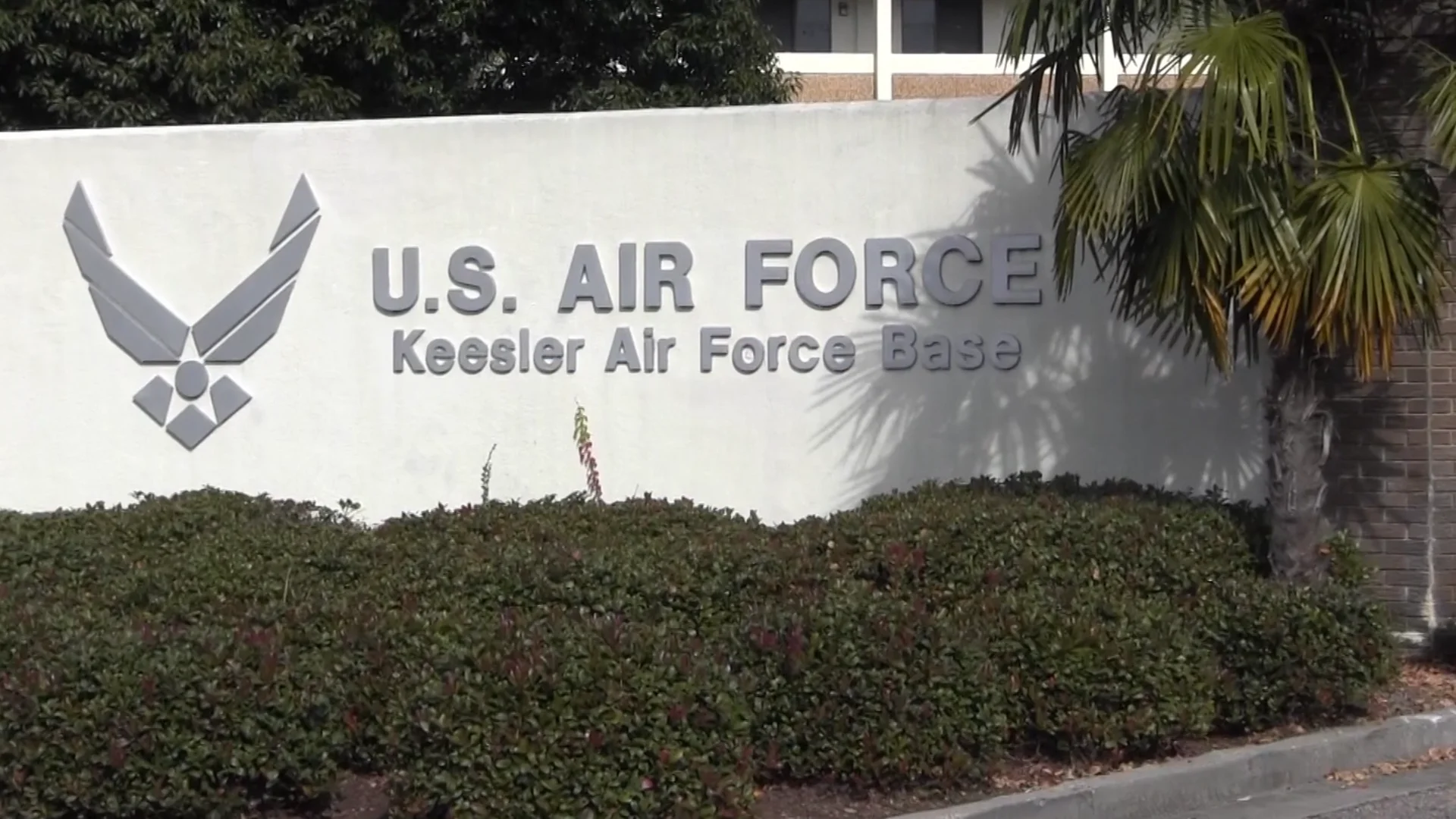
Keesler AFB — BAS Replacement Biloxi, MS

$1.9M Prime Contractor FA301024C0009
Keesler Air Force Base
  • Turnkey replacement of legacy TAC control system across 11 buildings — new BACnet/IP platform integrated to EMCS at Building 4705
  • Equipment scope: 30+ AHUs, 400+ VAV boxes with HW reheat, chillers, boilers, cooling towers, fan coil units, ERVs — across medical, training, and administrative facilities
  • COIN V2 network compliant — all switchovers limited to 3–5 days per facility to maintain building operations
  • 280-day performance period — delivered on time, no liquidated damages, no failed bonds

Tyndall AFB — Multiple Projects Panama City, FL

$2M+ Subcontractor
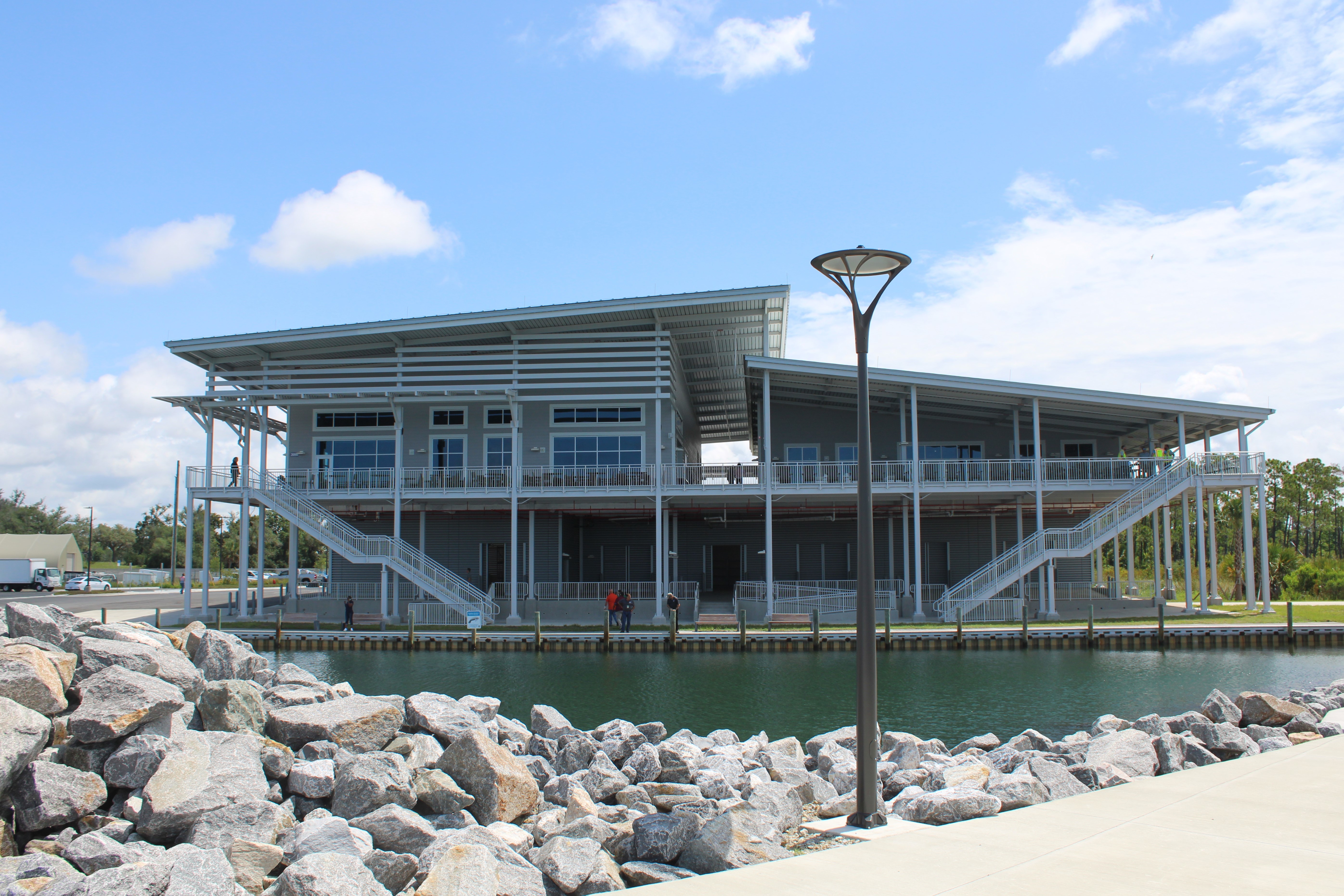
Tyndall Marina
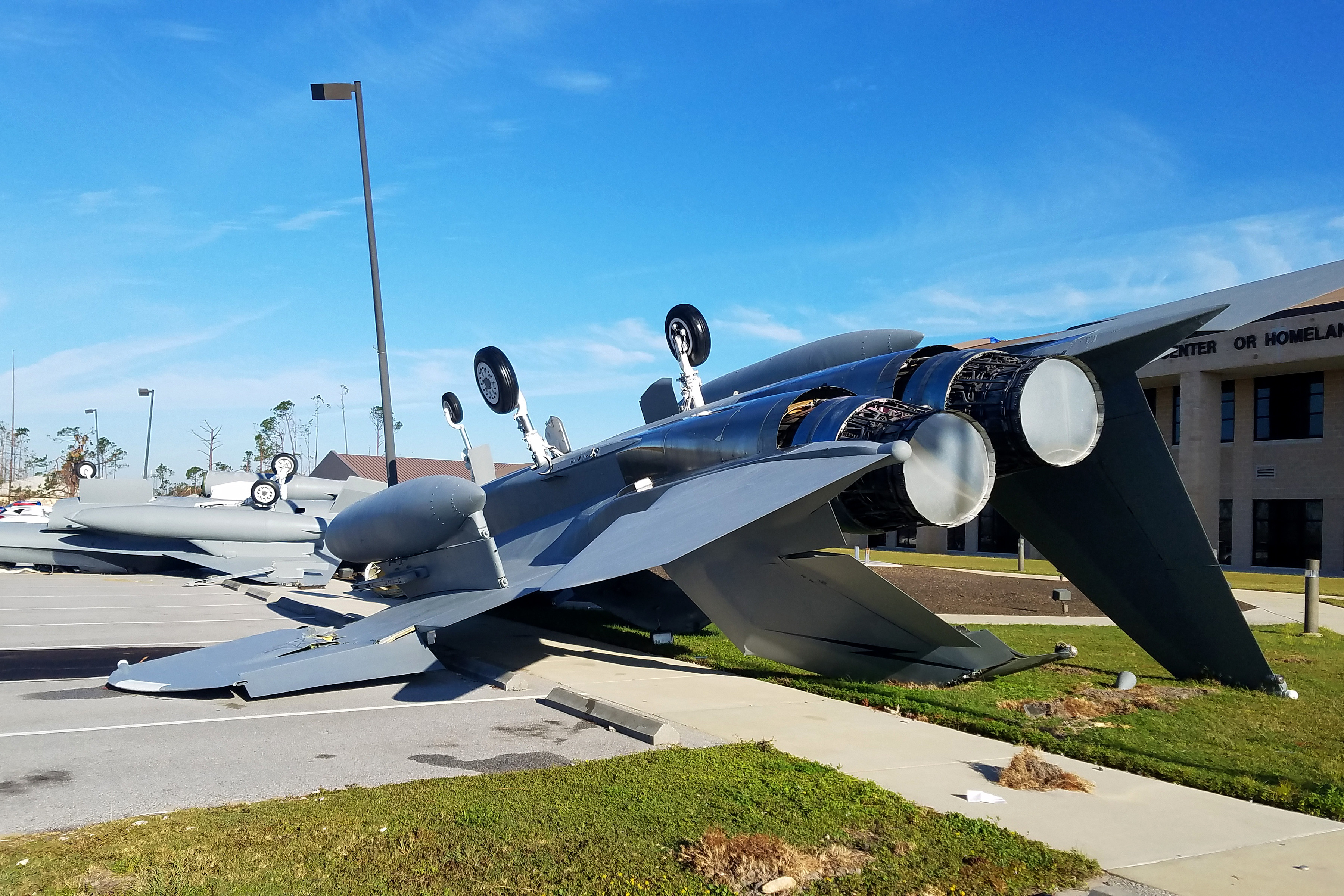
Tyndall Michael
  • HVAC controls installation and retrofit across multiple facilities on base
  • Post-Hurricane Michael rebuild environment — coordinating with multiple primes and trades simultaneously
  • Scope included administrative, training, and support buildings with DDC retrofits, device replacements, and startup / checkout support during phased reconstruction
20
Building 1416 — EMCS Upgrade
FA282325Q0045 SAPF — Secure Facility Prime
Facility: JSF Academic Training Center · active SAPF
Period: 545 calendar days
Scope — EMCS Replacement
  • Replaced 7 legacy Niagara AX v3.8 JACEs with Niagara N4 v4.13 — restored connectivity lost due to aged equipment
  • 332 LON field devices replaced with BACnet/IP over CAT 6 — 20 AHUs · 189 VAVs (HW reheat) · 3 chillers · 3 cooling towers · 2 boilers · 3 ERVs · 3 OAUs · 12 pumps
  • All programming and graphics updated on building-level JACE and ENS at Building 696; full P2P trending
The Challenge — Active SAPF
  • 100% U.S. citizen workforce · I-9 verification for every technician · 10-business-day base access lead time
  • No Bluetooth, Wi-Fi, or camera-capable devices on site — laptops required 96 CEG IT security scan before use; volt meters and flukes needed PSO approval
  • Egress maintained at all times — active JSF training ongoing during construction; phasing plan required
Commissioning
  • Independent PVT (Performance Verification Test) — hydronic and air-side · government-witnessed · 20% VAV spot check with ±10% failure tolerance
Eglin AFB — Building 1416
F-35 Lightning II Training Facility · Allied Nations Lobby
21
Section 6

What Nobody
Talks About.

Two honest observations about the controls industry that affect every project — including yours.

22
Margin Stacking — The Hidden Cost

On a typical federal construction project, controls pricing passes through multiple layers of markup before it reaches the owner — and few people know how large the stack actually is.

A Typical Markup Stack — Starting from $100K Installed Cost
Controls Installer base cost (labor + materials) $100,000
+ Controls Installer overhead & profit (Tier 4) + 15–25%
+ Controls Contractor markup (Tier 3) + 15–25%
+ Mechanical Sub markup on controls (Tier 2) + 10–15%
+ General Contractor markup on mechanical (Tier 1) + 10–15%
Owner pays approximately (1.6× – 2.1× the base cost) $160K – $207K
Where Controls Lives in the Chain
Government / Owner Sets the budget · often under-scoped for controls General Contractor Prime contract · adds 10–15% markup on all subs TIER 1 Mechanical Sub Holds controls scope · adds 10–15% markup TIER 2 Controls Contractor Programs & commissions · adds 15–25% TIER 3 Controls Installer 4th Tier · field labor adds own 15–25% margin cost flows down +15% +15% +25% +25%
23
The Controls Company

Thank You.

Tim Collins — President  |  David Harrison — Vice President
The Controls Company
Web
www.TheControlsCompany.com
Tim
850.490.1844
Tim@ControlsCo.net
David
850.380.6318
David@ControlsCo.net
Email
Info@TheControlsCompany.com
SAM.gov
UEI: SKK8HGNJ9EL3
CAGE: 8RHF6
Questions?
thecontrolscompany.com/SAME_2026
Slide Overview  —  Press Escape or G to close
1 / 23
Keyboard Shortcuts
← / →Previous / Next slide
Click right / leftNext / Previous slide
Home / EndFirst / Last slide
SpaceNext slide
GToggle slide overview
FToggle fullscreen
HToggle controls bar
?Show this help